
Stonehenge: Read the Landscape Beyond the Stones
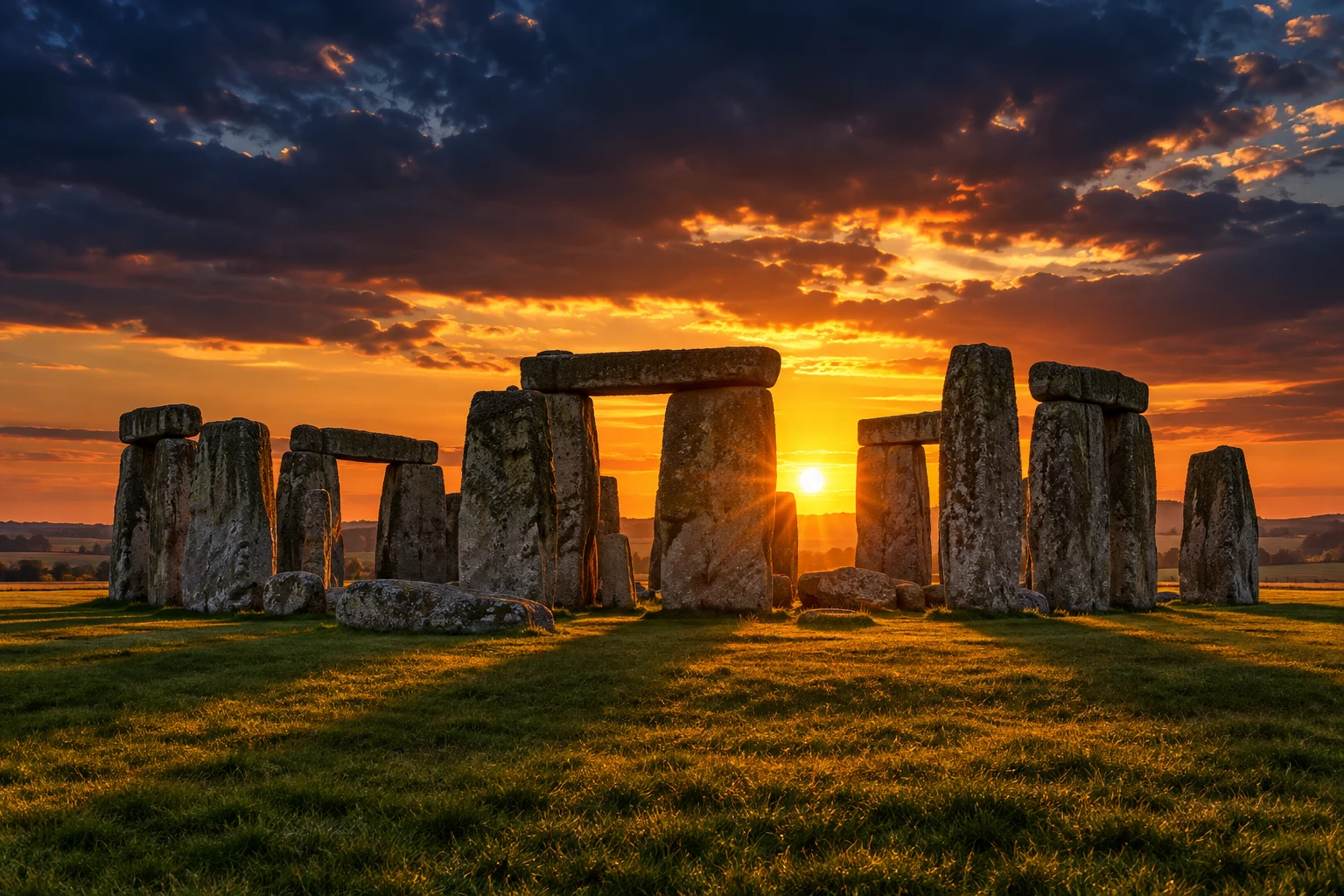
England · History & archaeology · Destination guide
Stonehenge is one of the world’s most recognisable prehistoric monuments. Familiarity can make it seem simple: a ring of stones, a question about the builders and a photograph against the sky. The wider landscape tells a much more interesting story.
A monument within a landscape
The World Heritage property includes Stonehenge, Avebury and associated prehistoric sites. Earthworks, burial monuments and traces of settlement give the stone circles their setting. The surviving remains belong to a long history of building and use, rather than a single moment of construction.
Start with a site plan. Locate the stone circle within its surroundings, then notice how interpretation connects it with other features. What looks isolated in a closely cropped photograph may become part of a network when viewed at landscape scale.
Engineering, ceremony and uncertainty
The shaping, arrangement and assembly of the stones demonstrate substantial technical skill. Their positions and relationships to the solar cycle are part of the archaeological discussion. But evidence of an alignment does not recover every belief or intention of the people who built and used a monument.
Separate three questions: what survives, what researchers infer from it and what remains uncertain. A confident explanation should show how it moves between those stages. Mystery is most useful when it encourages careful questions, rather than replacing evidence with certainty.
Make more of your visit
Use the official interpretation to build a short timeline before approaching the monument. Compare the scale of the stones with the wider landscape, and allow time for the visitor displays rather than treating them as an optional extra. Ask which features you can observe directly and which depend on excavation or specialist analysis.
Confirm current ticketing, opening times and access arrangements with the site operator. Follow the marked routes and barriers; access close to the stones is governed by specific arrangements. Respect both the archaeology and the people who attach cultural or spiritual meaning to the place.
Continue the enquiry
Afterwards, choose one claim from a display or guide and trace its source. Note whether it concerns a measurement, an archaeological find or an interpretation. This is a practical way to bring an evidence-led approach home from a visit.
UNESCO: Stonehenge, Avebury and Associated Sites
More world destinations → · How to investigate a historical question →
Original Dark Discoveries guide. Heritage source checked 29 October 2026. Confirm current visitor arrangements separately.