
Petra: The City Carved in Stone
Jordan · Ancient mysteries · Destination guide
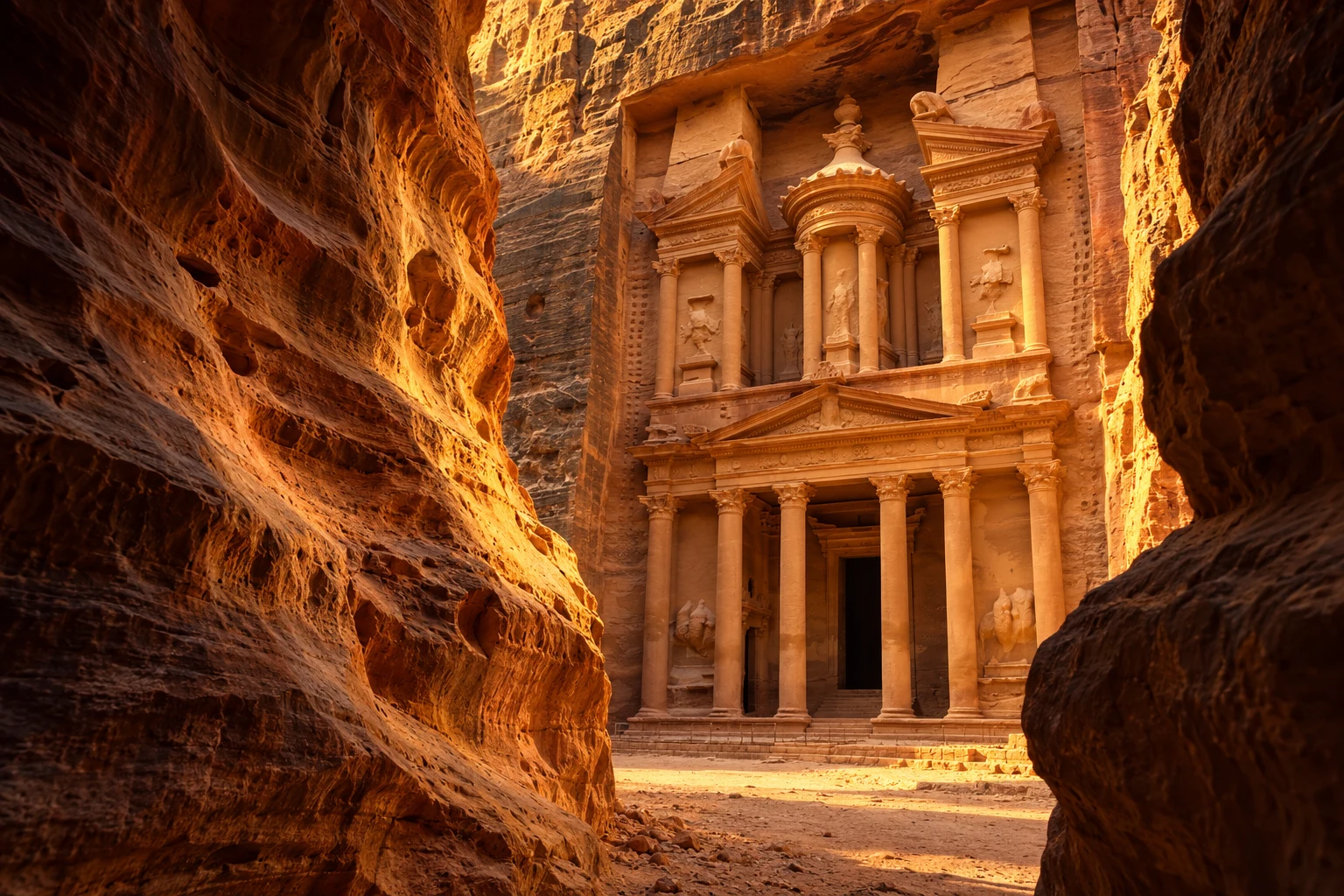
Petra is often reduced to a single view: a monumental facade appearing at the end of a narrow canyon. That first encounter is memorable, but it is only the beginning. The archaeological landscape includes rock-cut monuments, freestanding buildings and the traces of a city shaped by trade and water.
Look beyond the famous facade
The Nabataean city combined striking architecture with the practical systems that made urban life possible in an arid setting. Its monuments show a meeting of architectural traditions, including Hellenistic influences, while channels, reservoirs and cisterns reveal a different kind of achievement. A useful visit gives both kinds of evidence room to speak.
Instead of asking only how a facade was carved, ask how people moved through the city, where water was stored and which buildings served public, religious or funerary purposes. These questions turn a dramatic sight into a landscape that can be read.
What the evidence supports
Petra’s rock-cut monuments, inscriptions and water-management remains provide material evidence of the Nabataean world. The familiar names attached to individual monuments are not always literal descriptions of their original function. Treat a popular label as the start of a question, then consult the site’s interpretation and archaeological sources.
There is no need to invent a hidden civilisation to find the place extraordinary. Engineering, exchange, skilled labour and changing religious traditions already offer a rich historical story.
Plan a thoughtful visit
Choose a manageable route using the current official site plan. Give yourself time for the approach as well as the monuments, and match the distance to your own mobility and conditions. Confirm opening arrangements and permitted routes directly with the operator before travelling. Respect closures and avoid climbing on historic fabric.
Keep a small notebook: record one architectural detail, one practical feature and one question you could not answer. Add the name of the sign, guide or publication that informed each observation. This simple habit helps separate what you saw from what you later inferred.
Read further
UNESCO: Petra — history, significance and conservation
Explore the world destination directory → · Prepare for a heritage visit →
Original Dark Discoveries guide. Heritage source checked 29 October 2026. Site access and travel conditions must be checked separately before departure.