
Angkor: Temples, Water and a Living Landscape
Cambodia · Lost civilisations · Destination guide
Angkor rewards a slower kind of attention. Its temples are extraordinary, but they belong to a larger landscape of settlements, roads and water systems. To see only a famous silhouette is to miss the relationships that give the place its historical depth.
More than one temple
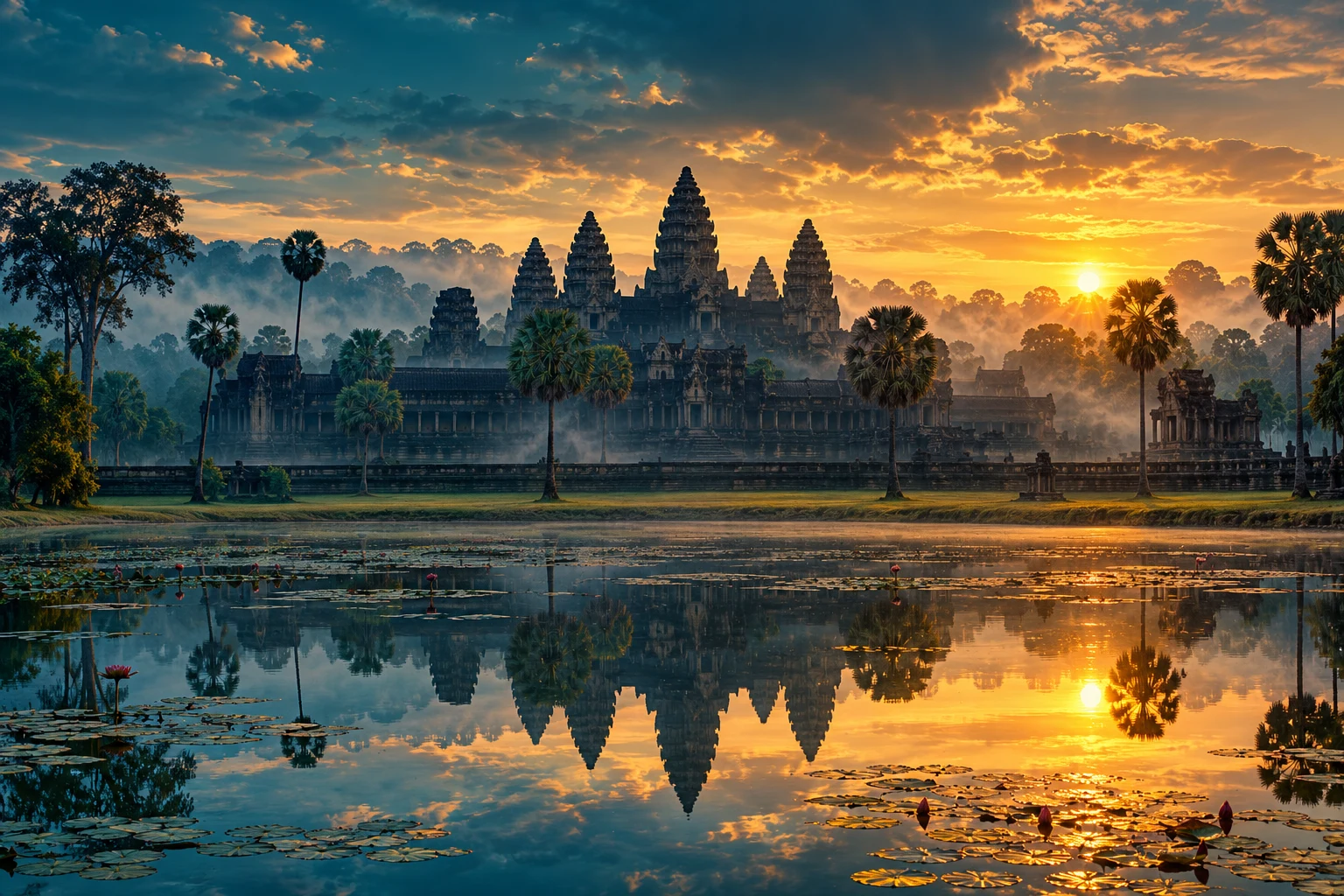
Angkor Archaeological Park preserves remains of successive capitals of the Khmer Empire. Angkor Wat and the Bayon at Angkor Thom are among its best-known monuments. Their architecture and sculpture connect religious ideas, political authority and skilled artistic work.
A useful first step is to distinguish the individual monuments from the wider archaeological park. A name on a travel itinerary may refer to one temple, a group of structures or the whole cultural landscape. Keeping those scales separate makes both planning and interpretation clearer.
Follow the water
Reservoirs, canals and other hydraulic features are central to understanding Angkor. They invite questions about how people organised space, supported urban life and adapted their environment. These features can be less immediately dramatic than a temple entrance, but they are essential to reading the landscape.
Look for interpretation that connects a visible feature to archaeological evidence. A photograph can show that a reservoir exists; explaining its role and history requires more context. Avoid treating a single striking view as a complete explanation of a complex society.
Recognise living heritage
Angkor is not an empty stage left behind by history. Communities, religious practices and cultural relationships continue in and around the park. Visit with the same respect you would bring to a place that matters deeply to the people who live there.
Follow current guidance on dress, photography, access and appropriate conduct. Keep to permitted paths and avoid touching or climbing carved surfaces. When a route is closed for conservation, the closure is part of protecting the experience for future visitors.
Build a meaningful route
Choose a small set of monuments you can understand well, rather than trying to collect every famous view. Compare one architectural detail across two sites. Note how a causeway, enclosure or water feature shapes your approach. Check current passes and visitor arrangements with the official operator before departure.
For your notes, record what you observed, what the official interpretation explains and what you still want to investigate. That distinction gives curiosity somewhere useful to go.
UNESCO: Angkor — history and conservation
Explore world destinations → · Our research and visiting guidelines →
Original Dark Discoveries guide. Heritage source checked 29 October 2026. Confirm current access and travel conditions separately.